Haiye Medical
Choosing among China’s fibre optic laryngoscope manufacturers requires more than comparing catalogue prices. Reliability depends on practical details: clear illumination, consistent blade fit, durable fibre bundles, and traceable quality records. Grand View Research’s 2024 Airway Management Devices Market analysis estimated the global market at about US$1.9 billion in 2023. This figure covers a broad device category, not fibre optic laryngoscopes alone. Still, it shows why buyers should examine product-level evidence rather than treat market growth as proof of quality.
Look closely. For each supplier, ask for documented inspection procedures, material specifications, and testing records for the handle and blade. Check how the company verifies light transmission and manages production changes. Ask whether the product information explains cleaning and maintenance requirements for the intended model. A polished sample is useful, but it cannot replace consistent batch documentation or responsive technical support. These points help distinguish established manufacturing capability from attractive sales claims.
This guide compares China-based manufacturers through verifiable information, including product range, manufacturing experience, quality documentation, and export support. The word “best” needs care: a suitable supplier for one hospital may not fit another’s procurement needs. Public information can also be incomplete, and certificates alone do not establish clinical performance. Buyers should confirm current documents and assess products against their own clinical and purchasing requirements.
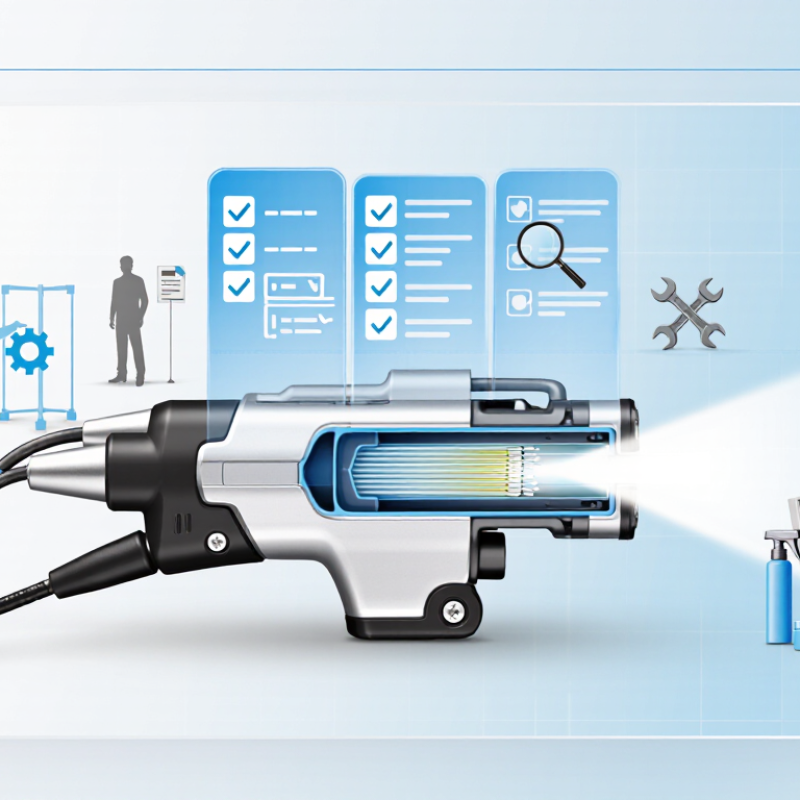
ISO 7376:2020 defines compatibility around the blade–handle connection, mechanical engagement, and illumination. A “universal” label alone does not establish that a fibre-optic blade will fit or perform correctly. Buyers should check the specified interface dimensions and test the exact handle–blade combination for secure attachment and adequate light transmission. A blade may click into place yet still wobble or provide weak illumination. Small detail. Big consequence.
Grand View Research estimated the global laryngoscope market at about US$1.2 billion in 2023. That figure signals a large, active market, but it does not verify any product’s compatibility. For manufacturers, clear test records against ISO 7376:2020 offer stronger evidence than broad catalogue claims. For hospitals, checking a sample with the intended handle can reveal fit issues before routine use. Standards reduce uncertainty, though they cannot replace careful inspection; even compliant equipment deserves a second look.
A practical fibre optic laryngoscope set often covers Macintosh sizes 1–4 and Miller sizes 0–4. These ranges offer options for different airway sizes, but they are not a substitute for clinical assessment. A small Miller blade can help lift a newborn’s epiglottis directly; a larger Macintosh blade is commonly selected for adult anatomy. Fit depends on the patient, the operator’s technique, and the view obtained. Small details matter.
ISO 7376:2020, the international standard for laryngoscopes used in tracheal intubation, addresses device performance and handle–blade compatibility. It does not prescribe one blade size for each age or patient group. That distinction matters when comparing product specifications: a listed size range says what is supplied, not whether each blade suits every clinical setting. Fibre optic illumination can provide a clear view, but it cannot correct poor positioning or an unsuitable blade. I still double-check the set against the patients we actually treat; inventory lists can look complete while missing a useful size.
Tips: Check the blade lock, light output, and fit before use. Keep Macintosh and Miller options available, then follow local clinical guidance. A quick check helps.
For fibre optic laryngoscopes, illumination is more than a bright spot at the blade tip. Compare beam consistency, colour rendering, and how evenly light reaches the viewing area. A focused white beam can make anatomical features easier to distinguish, while glare or dim edges may reduce visibility. Look closely.
Chinese manufacturers may use different light-source designs and fibre arrangements, so compare product specifications with hands-on samples where possible. Check brightness at the working distance, not only in promotional images. Ask how illumination is measured and whether performance remains stable after repeated use. Paper specifications do not tell the whole story.
Build quality shows in small details: smooth blade edges, secure joints, clean fibre ends, and a handle that feels balanced in the hand. Inspect the connection between blade and handle for looseness, and check whether controls respond consistently. Materials and assembly should withstand routine cleaning according to the maker’s instructions. That matters. A polished exterior alone cannot confirm long-term durability, and a quick inspection may miss weak points. Comparing samples under the same lighting and handling conditions gives buyers a more useful picture of differences in illumination and construction.
When comparing fibre optic laryngoscope manufacturers in China, examine quality records alongside product specifications. A clean image and durable handle matter, but documented controls show how consistently a device is made. Ask whether the manufacturer operates a quality management system certified to ISO 13485, and check that the certificate covers the relevant site and device activities. Certification is useful evidence, not a guarantee of every product’s performance.
Traceability should connect each finished scope to its production lot, key components, inspection results, and release records. For example, a supplier should be able to explain which light guide and materials went into a particular batch. Ask how complaints, nonconformities, and design changes are recorded. Details can be tedious. They are also easy to overlook during a factory audit.
Sterilization validation needs particular attention for sterile, single-use devices. Request evidence that the validated process suits the device materials, packaging, and stated shelf life, and ask how routine process monitoring is controlled. Reusable models require clear reprocessing instructions supported by appropriate testing. A document may look complete while leaving practical questions unanswered. Check that the instructions match the exact model being purchased, then compare them with validation records and packaging labels. A checklist can miss small inconsistencies; that is worth admitting.
When comparing fibre optic laryngoscope manufacturers, look beyond the purchase price. Ask how many reuse cycles each reusable component has been tested to withstand under its stated cleaning and sterilization instructions. A vague “durable design” is not a usable procurement metric. Request written cycle data and clear guidance on inspection, reprocessing, and replacement. Track cycles by serial number or department log, and check for loose joints, damaged seals, or dimming light transmission. Small details matter.
Warranty terms should identify what is covered, for how long, and what may void coverage. Confirm whether the warranty includes the light source, fibre bundle, handle, and repair labour, or excludes wear from routine use. Ask about expected service response times, loaner equipment, spare-part availability, and repair costs after the warranty ends. Get the answers in writing. A low-cost unit can become expensive when a repair leaves a clinical team waiting. Conversely, a generous warranty is less useful if support is difficult to reach. Compare these commitments alongside validated reuse cycles, then review them with the staff who clean and use the devices. Procurement tables look neat; real service records can be messier, so leave room to reassess.
| Procurement Metric | What to Verify | Suggested Tender Requirement | Evidence to Request |
|---|---|---|---|
| Reusable blade life | There is no single reuse-cycle limit applicable to every fibre optic laryngoscope blade. The validated reprocessing instructions and inspection criteria determine whether a blade can be reused. | Require the supplier to state the validated reprocessing method and any specified cycle limit. Do not accept an unsupported generic cycle-life claim. | Model-specific instructions for use (IFU), cleaning and sterilization validation, and documented replacement or discard criteria. |
| Reusable handle life | Service life depends on the handle design, battery or power system, cleaning method, and manufacturer’s instructions. | Request a stated service-life policy and a procedure for checking illumination, electrical contacts, and physical condition. | IFU, maintenance guidance, and inspection checklist for the offered handle. |
| Single-use components | Components identified as single-use are intended for one patient use and should not be reprocessed for reuse. | Require clear labeling and separate pricing for disposable blades or other single-use parts, where offered. | Product labeling, IFU, and unit price per disposable component. |
| Warranty coverage | Warranty duration, covered parts, exclusions, and remedies are supplier-specific; there is no universal warranty term. | Set the required warranty period in the purchase contract. For example, a buyer may request at least 24 months from acceptance, subject to negotiation. | Written warranty stating start date, covered components, exclusions, repair or replacement terms, and shipping responsibility. |
| Repair and service response | Response times and repair turnaround are contractual service levels, not guaranteed industry-wide standards. | Define response and repair targets in the contract—for example, acknowledgement within two business days and a repair or replacement plan within ten business days. | Service-level agreement, service contact details, escalation process, and recent service-performance records if available. |
| Spare parts availability | Availability of compatible light sources, batteries, cables, and other replaceable parts can affect downtime. | Specify which parts must remain available and for how long after purchase; agree on prices and lead times. | Spare-parts list, price schedule, availability commitment, and ordering procedure. |
| Reprocessing compatibility | Permitted cleaning, disinfection, and sterilization methods vary by model and component. A method not listed in the IFU should not be assumed compatible. | Confirm that the product’s validated reprocessing instructions match the facility’s equipment and infection-control procedures. | Model-specific IFU and supporting validation documentation for each reusable component. |
| Acceptance and incoming inspection | Inspection can identify transit damage, missing parts, illumination problems, and documentation gaps before clinical use. | Make payment or final acceptance subject to a documented inspection and functional test using the supplier’s instructions. | Delivery checklist, conformity and regulatory documents applicable to the destination market, and functional-test procedure. |
| How to compare bids | Treat cycle limits, warranty terms, and service targets as model-specific or contract-specific. Compare written evidence and total cost of ownership rather than relying on an unverified reuse-cycle number or general service claim. | ||
It addresses the blade–handle connection, mechanical engagement, and illumination. A “universal” label alone does not prove a secure fit or adequate light. A click is not proof.
Check the specified interface dimensions, then test the exact handle–blade combination. Look for a secure connection without wobble, and confirm light reaches the viewing area.
Compare beam consistency, colour, and brightness at the working distance. A bright tip can still leave dim edges or create glare. Look closely.
Check smooth blade edges, secure joints, clean fibre ends, and consistent controls. Hold the handle to assess its balance. A polished surface tells little about durability.
Ask whether an ISO 13485-certified quality system covers the relevant site and device activities. Certification is useful evidence, but it cannot guarantee each product’s performance.
Records should link each finished device to its production lot, key components, inspection results, and release records. Ask how complaints and design changes are documented. Details can be tedious.
Request validation records showing the sterilization process suits the device, packaging, and stated shelf life. Check routine monitoring, too. A complete-looking document may still leave questions.
Confirm that reprocessing instructions match the exact model and are supported by appropriate testing. Compare them with validation records and packaging labels. Check twice; small inconsistencies are easy to miss.
Choosing a fibre optic laryngoscope from a Chinese manufacturer involves more than comparing prices. Buyers should first check compatibility with the ISO 7376:2020 connection system and confirm that the available blade range meets clinical needs, commonly including Macintosh sizes 1–4 and Miller sizes 0–4. Illumination consistency, blade finish, handle ergonomics, and overall build quality are also important factors when assessing product performance.
Before purchasing, review the manufacturer’s quality controls, including ISO 13485 certification, product traceability, and documented sterilization validation where applicable. Procurement decisions should also account for expected reuse cycles, warranty terms, replacement-part availability, and the responsiveness of technical service. Comparing these points helps buyers assess reliability and long-term value while ensuring the selected equipment fits their intended use and maintenance requirements.
