Haiye Medical Haiye Medical

China Best Disposable Fiber Optic Bronchoscope Supplier?

Time:2026-10-23 Author:Mason
0%

Choosing the China best disposable fiber optic bronchoscope supplier requires more than comparing catalog prices. Hospitals need dependable visualization, documented sterilization, and responsive technical support. A bronchoscope should move smoothly through the airway, produce a clear image, and maintain suction without unexpected blockage.

Market evidence supports growing interest in single-use systems. Grand View Research’s 2024 analysis estimates that the global bronchoscopy market will expand at approximately 6.3% annually from 2024 to 2030. This growth reflects demand for faster procedures, infection-control improvements, and wider access to pulmonary diagnosis. The Centers for Disease Control and Prevention classifies bronchoscopes as semicritical devices requiring high-level disinfection when reusable. That guidance makes disposable options increasingly relevant, especially where reprocessing capacity is limited.

However, market growth does not prove supplier quality. It is only a starting point. A reliable Chinese manufacturer should provide ISO 13485 certification, traceable production records, biocompatibility evidence, and clear performance specifications. Buyers should also review bending capability, distal-tip control, working-channel diameter, image resolution, and packaging integrity. Clinical teams often notice small details, such as fogging during suction or delayed image transmission. These details matter.

No supplier is perfect. Some product claims may sound impressive but lack independent validation. This article compares leading Chinese manufacturers through product evidence, manufacturing experience, regulatory readiness, and after-sales service. The goal is practical judgment, not promotional ranking. Procurement teams should still confirm local approval requirements and conduct hands-on evaluations before clinical adoption.
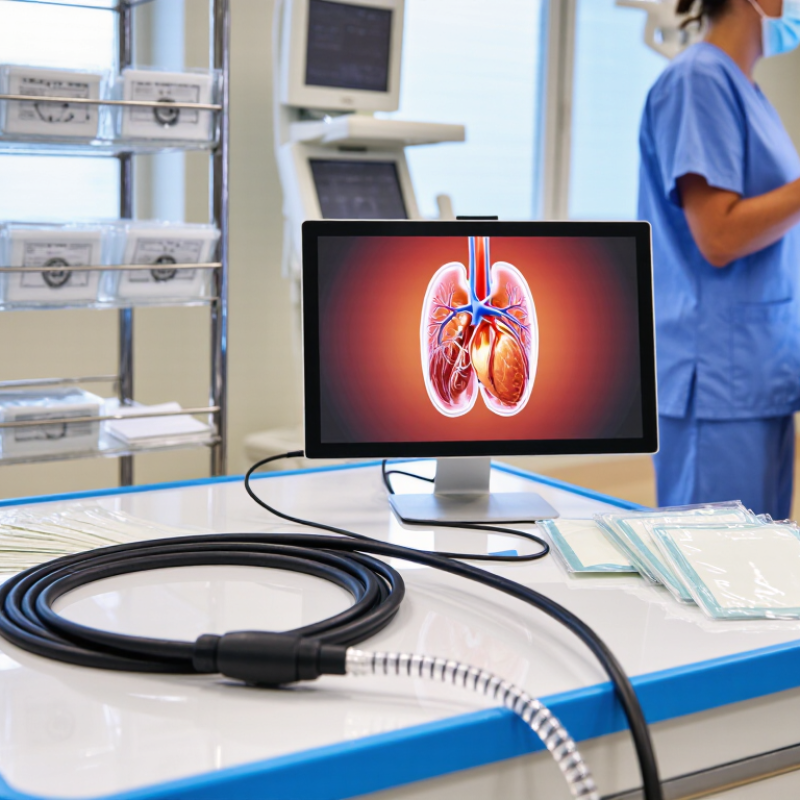
China Best Disposable Fiber Optic Bronchoscope Supplier?

What Is a Disposable Fiber Optic Bronchoscope?

What Is a Disposable Fiber Optic Bronchoscope?

A disposable fiber optic bronchoscope is a sterile, flexible tube used to inspect the airways. Its fiber bundle carries the image from the distal tip to the eyepiece or display. The clinician can examine the trachea, bronchi, mucus, bleeding, or suspected lesions. Many models include suction and a working channel for lavage or tissue sampling.

Unlike a reusable scope, this device is supplied for one patient and then discarded. It reduces cleaning steps, storage demands, and concerns about incomplete reprocessing. The 2024 MarketsandMarkets report described the disposable endoscopes market as a double-digit growth sector, driven partly by infection-control needs. However, market growth does not prove clinical superiority. Image sharpness, suction strength, tip control, and channel diameter still vary greatly. In practice, a narrow channel may struggle with thick secretions. That detail is easy to overlook.

Tips: Check the scope’s outer diameter, bending angle, working-channel size, and compatibility with your monitor. Ask for validated data on image quality and suction performance. Review the instructions for use, sterilization status, packaging integrity, and disposal procedures. A supplier should also provide training records and traceable quality documentation. The FDA and professional respiratory-care guidance emphasize following device-specific instructions, because “single-use” does not remove the need for safe handling. Data reports offer useful direction, but bedside testing remains necessary.

How Does a Disposable Fiber Optic Bronchoscope Work?

A disposable fiber optic bronchoscope uses a flexible insertion tube to reach the patient’s airways. At its tip, a tiny lens collects the airway image. Bundles of optical fibers carry that image back through the tube. The clinician views it through an eyepiece or connected display. Separate fibers deliver light from an external source. The result is a narrow, illuminated view of the trachea and bronchial passages.

The handle controls tip movement through small steering mechanisms. This allows the operator to guide the scope around airway branches. Many models include a working channel for suction or compatible instruments. Suction can remove mucus and improve visibility. Before use, trained staff should inspect the package, lens, connector, and control response. A clear image matters. So does reliable airflow management. In practice, careful preparation often prevents avoidable delays.

Disposable construction reduces the need for cleaning, drying, and high-level disinfection between patients. It can also lower concerns about residual contamination from incomplete reprocessing. However, “disposable” does not mean risk-free. The device still requires trained handling and proper clinical protocols. Image quality may vary with lighting, secretions, or fiber alignment. Some users may notice less detail than with advanced reusable systems. That limitation deserves honest consideration when selecting equipment. A qualified supplier should provide technical documents, usability guidance, and support for clinician training.

How a Disposable Fiber-Optic Bronchoscope Works

Flexible fiber-optic bronchoscopes use optical fibers to carry illumination toward the airway and transmit the observed image back to the eyepiece or imaging system. Their outer diameter is selected according to patient age, airway size, and clinical purpose. Smaller scopes support access to narrower airways, while larger scopes generally provide more space for suction and instruments.

Which Features Define a Reliable Bronchoscope Supplier?

A reliable disposable fiber optic bronchoscope supplier must prove more than attractive image quality. In daily practice, clinicians need stable illumination, clear distal optics, smooth articulation, and predictable suction. The device should pass leak testing before use. Its sterile packaging needs an intact seal, readable lot numbers, and a practical expiration date. Small details matter.

Infection control is equally important. The World Health Organization reported in 2022 that healthcare-associated infections affect seven in 100 acute-care patients in high-income countries, and 15 in 100 in low- and middle-income countries. A disposable bronchoscope can reduce reprocessing-related risks, but it cannot remove every clinical risk. A responsible supplier should provide validated sterilization evidence, biocompatibility data, and transparent performance testing. Clear instructions should cover insertion, image adjustment, suction limits, disposal, and emergency handling.

Regulatory discipline separates dependable suppliers from resellers. Look for an ISO 13485 quality system, ISO 14971 risk management, traceability records, and documented complaint handling. Independent testing should support optical resolution, bending durability, electrical safety, and shelf-life claims. The FDA has repeatedly linked inadequate flexible-endoscope reprocessing with infection concerns, making supplier support part of patient safety. No supplier is flawless. I would still question any company promising zero failures. Real reliability includes rapid technical response, honest field data, and corrective action when a batch underperforms.

China Best Disposable Fiber Optic Bronchoscope Supplier? - Which Features Define a Reliable Bronchoscope Supplier?
Evaluation Dimension Reliable Supplier Benchmark Relevant Technical or Quality Evidence Recommended Verification Method Why It Matters
Quality Management System A documented medical-device quality system with current certification. ISO 13485 certification covering the applicable design, manufacturing, and distribution activities. Check the certificate scope, issuing body, validity dates, and manufacturing site address. Provides a structured framework for design control, production consistency, traceability, and corrective actions.
Regulatory Documentation Clear regulatory pathway for each target market. Market-specific registration, listing, clearance, or conformity documentation, depending on the destination country and device classification. Request certificates, declarations, registration details, and product-specific technical files rather than generic company documents. Regulatory approval is market-specific; a document valid in one country does not automatically authorize sales in another.
Risk Management A formal risk-management process covering the complete device life cycle. Risk analysis and risk-control records aligned with ISO 14971 principles, including foreseeable misuse and clinical hazards. Review a redacted risk-management summary and confirm that identified risks are linked to verification or validation evidence. Helps reduce risks related to airway trauma, device breakage, contamination, electrical safety, and loss of visualization.
Sterility Assurance Validated sterilization and packaging processes for single-use products. Validated sterilization cycle, sterile-barrier validation, package integrity testing, and a stated sterility assurance level. Review sterilization validation, packaging validation, lot-release records, and expiration-date justification. Maintains sterility until use and reduces the risk of infection caused by compromised packaging or inadequate processing.
Biocompatibility Patient-contacting materials evaluated for the intended contact type and duration. Biological evaluation based on ISO 10993 principles, with material and chemical information for patient-contacting components. Request the biological evaluation report and verify that the tested configuration matches the commercial device. Supports safe contact with airway tissue and helps identify irritation, sensitization, cytotoxicity, and other biological concerns.
Outer Diameter A clearly specified size range suitable for the intended adult or pediatric application. Common disposable bronchoscope configurations include approximately 3.0 to 6.0 mm outer diameter, depending on the model. Confirm the measured distal-tip diameter, shaft diameter, and compatibility with the planned endotracheal tube or airway. A smaller diameter can improve access to narrow airways, while larger sizes may provide a bigger working channel and stronger suction performance.
Working Channel The channel size is appropriate for suction, lavage, sampling, or accessory passage. Typical configurations range from approximately 1.2 to 3.0 mm, depending on the bronchoscope diameter and intended procedure. Verify the internal diameter, working-channel length, accessory compatibility, and suction performance using representative accessories. Determines whether the device can support required procedures such as secretion removal, bronchoalveolar lavage, or biopsy sampling.
Tip Articulation Smooth, predictable angulation in both directions with documented limits. Many flexible bronchoscope designs provide approximately 120° to 180° upward angulation and approximately 90° to 130° downward angulation, depending on the model. Test articulation before and after simulated use, including operation through an endotracheal tube or airway model. Improves navigation, visualization, and access to segmental and subsegmental bronchi.
Image Quality Stable real-time imaging with sufficient brightness, contrast, and field of view. Evaluate image resolution, color reproduction, image lag, field of view, depth of field, and performance in low-light conditions. Use a standardized visual test target and compare image quality at different distances and viewing angles. Clear imaging supports accurate airway identification, secretion management, sampling, and clinical decision-making.
Compatibility The scope works with the intended monitor, processor, accessories, and hospital workflow. Documented compatibility with the supplied display system and any required video processor, light source, or connection interface. Request a complete-system demonstration using the exact scope, monitor, power supply, and accessories to be purchased. Prevents hidden integration costs and reduces the risk of receiving scopes that cannot be used with existing equipment.
Electrical and EMC Safety The complete electrical system has been evaluated for safety and electromagnetic compatibility. Applicable testing may include IEC 60601-1 for basic safety and essential performance and IEC 60601-1-2 for electromagnetic compatibility. Review the test reports and confirm that they apply to the exact monitor, power supply, and scope configuration. Helps protect patients and operators from electrical hazards and unexpected performance problems in clinical environments.
Leakage and Mechanical Integrity The insertion tube, distal tip, control section, and working channel maintain integrity during intended use. Leak testing, tensile testing, bending-cycle testing, insertion-force evaluation, and distal-tip attachment testing. Perform incoming inspection and simulated-use testing with representative bending, suction, flushing, and accessory insertion. Reduces the likelihood of fluid ingress, loss of suction, component separation, or device damage during a procedure.
Traceability Every production lot can be linked to materials, manufacturing records, sterilization records, and release decisions. Lot number, manufacturing date, expiration date, unique device identification where required, and documented release criteria. Request sample labels, packaging artwork, batch records, and a mock recall or traceability exercise. Enables effective complaint investigation, field action, inventory control, and product recall management.
Shelf Life and Packaging The labeled shelf life is supported by real-time or appropriately justified stability data. Packaging configuration, storage conditions, transportation qualification, and stability evidence for the stated expiration period. Inspect package integrity after transport simulation and verify storage requirements on the label and instructions for use. Protects the sterile barrier and product performance throughout storage and distribution.
Instructions for Use Clear, market-appropriate instructions covering setup, operation, warnings, limitations, and disposal. Instructions should identify intended use, contraindications, compatible accessories, preparation steps, troubleshooting, and single-use restrictions. Have clinical and regulatory personnel review the instructions before approval of the supplier. Reduces user error and supports consistent, safe operation across different hospitals and clinical teams.
Production Capacity Capacity is demonstrated through documented process capability rather than only a quoted monthly output. Validated production lines, controlled cleanroom areas, trained operators, inspection procedures, and capacity planning for forecast demand. Conduct a quality audit or remote assessment and compare capacity evidence with the required delivery schedule. Helps prevent shortages, rushed production, inconsistent quality, and long lead times after purchase orders are placed.
After-Sales Support Defined response times for technical questions, complaints, nonconformities, and product changes. Documented complaint-handling, CAPA, change-notification, replacement, training, and service procedures. Ask for the escalation process, sample service-level agreement, and contacts for regulatory and technical support. Provides continuity after delivery and supports rapid resolution of clinical, technical, and compliance issues.

How to Evaluate China-Based Bronchoscope Manufacturers?

Evaluating a China-based disposable fiber optic bronchoscope manufacturer requires more than comparing prices. Start with its quality system, production controls, and documented experience with single-use respiratory devices. Request valid ISO 13485 certification, product registration documents, and recent audit records. Check whether certificates match the exact model, factory, and intended market.

Ask for technical evidence, not attractive specifications alone. Review image clarity, field of view, working-channel performance, suction strength, insertion-tube flexibility, and distal-tip angulation. Test several samples from different batches. A smooth demonstration unit may not represent routine production. That matters. Examine packaging seals, sterilization validation, shelf-life data, and lot traceability. Confirm how the manufacturer investigates complaints and handles corrective actions. Reliable suppliers can explain these processes clearly.

Factory communication also reveals operational maturity. Request a controlled sample order, written inspection criteria, and realistic production schedules. During a remote or onsite review, observe clean assembly areas, incoming-material checks, calibration records, and employee training. Ask for references from hospitals or distributors where permitted, while protecting patient and commercial confidentiality. Some suppliers communicate confidently but provide weak evidence. I would treat that as a warning, not a minor inconvenience. Pricing deserves careful analysis too; unusually low quotations may exclude testing, service support, or compliant packaging. A dependable evaluation balances clinical performance, manufacturing consistency, regulatory readiness, and long-term responsiveness.

What Quality and Service Standards Should Buyers Expect?

Buyers should expect more than a low unit price from a disposable fiber optic bronchoscope supplier. The WHO Global Report on Infection Prevention and Control (2022) estimates that 7 in 100 acute-care patients in high-income countries acquire at least one healthcare-associated infection. This makes validated sterility, sealed packaging, and clear lot traceability essential. Each device should undergo documented visual inspection, leak testing, and functional testing before shipment. The supplier should provide sterilization records, shelf-life data, and material information aligned with ISO 10993 and ISO 14971.

Performance must be measurable at the bedside. Buyers should request image-resolution data, field-of-view specifications, insertion-tube flexibility, tip angulation, and suction performance under simulated clinical conditions. The FDA’s guidance on medical-device quality systems emphasizes process control, complaint handling, corrective actions, and production records. These documents reveal whether quality is consistent or merely promised. Ask for sample units from different production lots. One perfect sample proves little.

Service standards deserve equal attention. A reliable supplier should answer technical questions quickly, provide user training, and maintain a written replacement policy for damaged or nonconforming units. Response time matters during urgent procedures. Yet some suppliers publish ambitious service claims without defining deadlines. That is a weakness buyers should challenge. Request acceptance criteria, escalation contacts, and post-market complaint data. A supplier that shares limitations honestly may be safer than one offering flawless language. Pricing still matters, but hidden costs include failed procedures, staff retraining, and delayed replacements.

FAQS

What is a disposable fiber optic bronchoscope?

It is a sterile, flexible tube for viewing the trachea and bronchi.

How does the device create an airway image?

A small lens collects the view at the distal tip.

What can clinicians examine with this scope?

Clinicians can inspect mucus, bleeding, airway narrowing, and suspected lesions.

Why choose a disposable design?

The scope is intended for one patient and then discarded.

Which features affect image quality?

Lens clarity, lighting, fiber alignment, and monitor compatibility all matter.

What should staff check before use?

Inspect the package seal, expiration date, lot number, lens, and connector.

How important is the working-channel size?

Channel diameter affects suction and instrument compatibility.

What makes a supplier dependable?

A dependable supplier provides traceable quality records and clear instructions.

Does disposable mean completely safe?

No. Safe handling, trained staff, and clinical protocols remain essential.

Conclusion

A disposable fiber optic bronchoscope is a single-use medical device designed to provide clear visualization of the airways while reducing the risk of cross-contamination associated with reusable instruments. It typically combines a flexible insertion tube, fiber optic imaging system, working channel, control handle, and light source. During a procedure, the clinician guides the scope through the airway, observes internal structures, and may perform suction or sampling through the working channel. Its ease of preparation, consistent performance, and ready-to-use design make it suitable for various clinical settings.

When selecting a China-based bronchoscope supplier, buyers should evaluate manufacturing experience, product design, image quality, flexibility, sterility assurance, packaging, and compatibility with supporting equipment. Reliable manufacturers should provide clear technical documentation, traceable quality control, regulatory support, stable production capacity, and responsive communication. Buyers should also review sample performance, inspection procedures, after-sales service, delivery reliability, and customization capabilities to ensure the supplier can meet both clinical requirements and long-term purchasing expectations.

Mason

Mason

Mason is a seasoned marketing professional with a deep expertise in the company's offerings and a passion for driving brand awareness. With a strong background in digital marketing strategies, he has an innate ability to connect with diverse audiences and effectively communicate product benefits.......