Haiye Medical
Choosing a bronchoscope for sale requires more than comparing prices or product photos. Hospitals need dependable imaging, controlled suction, clear documentation, and compatibility with existing reprocessing systems. A device may look advanced online yet perform poorly in a busy bronchoscopy suite.
Clinical demand remains significant. According to the International Agency for Research on Cancer’s GLOBOCAN 2022 estimates, lung cancer caused approximately 2.5 million new cases and 1.8 million deaths worldwide. These figures underline the importance of timely airway examination, tissue sampling, and treatment planning. The World Health Organization also identifies respiratory disease management as a continuing global healthcare priority.
China has become an important manufacturing base for medical endoscopy equipment. However, buyers should assess manufacturers through evidence, not marketing language. ISO 13485 certification, applicable regulatory registration, optical resolution, working-channel dimensions, sterilization instructions, and service coverage all deserve careful review. Product demonstrations can reveal practical details, such as image stability inside a narrow bronchial branch or how smoothly the insertion tube responds to small hand movements.
Price matters. It should not lead.
Professional guidance from organizations such as the American College of Chest Physicians and the European Respiratory Society supports structured training, infection control, and appropriate clinical selection. Buyers should request technical files, warranty terms, user manuals, and performance references before ordering. I have seen specifications appear complete while after-sales support remained unclear. That gap deserves attention.
This guide examines where to buy a reliable China bronchoscope for sale, how to compare suppliers, and which technical details should influence a safe purchasing decision.
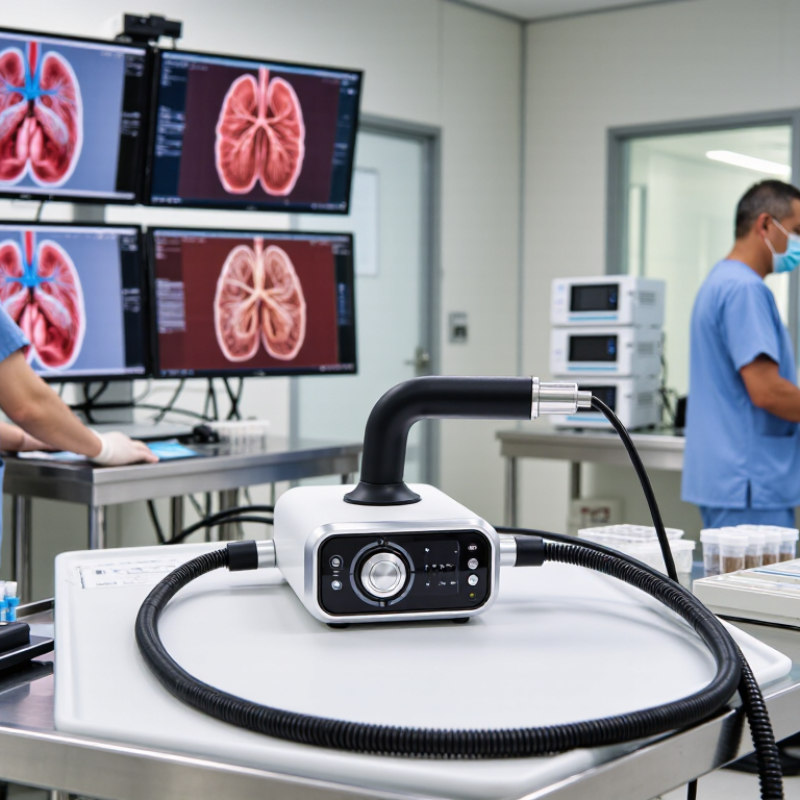
China Top Bronchoscope for Sale Where to Buy?
Bronchoscopes in China serve different clinical needs, so procurement should begin with application, not price. Flexible bronchoscopes support airway inspection, bronchoalveolar lavage, biopsy, and secretion removal. They are common in respiratory wards and operating rooms. Rigid bronchoscopes provide wider channels and stronger control during foreign-body removal, bleeding management, and selected airway procedures. They require experienced operators and general anesthesia.
Endobronchial ultrasound bronchoscopes combine imaging with needle sampling. Clinicians use them to assess mediastinal lymph nodes and support lung-cancer staging. Disposable bronchoscopes can reduce reprocessing demands during intensive-care procedures. However, image quality, suction performance, and waste handling need careful evaluation. The World Health Organization reported 3.5 million COPD deaths globally in 2021, highlighting the continuing need for reliable respiratory diagnosis. China’s National Bureau of Statistics reported that people aged 60 and above reached 21.1% of the population in 2023.
Procurement teams should verify NMPA registration, ISO 13485 certification, sterilization validation, repair support, and operator training. Hospitals can compare authorized medical-device distributors, public procurement platforms, and qualified domestic suppliers. Ask for clinical references. Test the scope first.
One weakness remains. Market reports often group bronchoscopes with wider endoscopy equipment, making precise China-specific estimates difficult. A 2024 industry analysis from Grand View Research still indicates sustained global bronchoscopy-market growth, driven by minimally invasive diagnosis and treatment. Those figures guide planning, but they should not replace local clinical trials, service records, or hands-on evaluation.
China’s leading bronchoscope manufacturers now focus on clearer imaging, controlled insertion, and dependable suction. High-definition cameras can reveal small mucosal changes under suitable lighting. Many current systems offer a 2.8 mm working channel for biopsy tools and secretion removal. Smooth articulation also matters. A stiff control ring can increase operator fatigue during long procedures.
According to Grand View Research’s 2024 Bronchoscopy Market Analysis, the global market was valued at about USD 2.3 billion in 2023. The report expects continued growth through 2030, driven partly by improved visualization systems. This demand explains China’s investment in compact processors, LED illumination, and digital image enhancement. Buyers should inspect image latency, field of view, insertion-tube diameter, and bending angles. Small details matter.
They matter clinically.
Experienced procurement teams should request ISO 13485 certification, IEC 60601 test documentation, and cleaning-compatibility data. Disposable and reusable designs require different workflow calculations. Check whether the scope tolerates repeated high-level disinfection without image degradation. Also test suction performance with realistic fluid viscosity, not only showroom water. A lower purchase price may hide costly accessories, repairs, or limited technical support. This is where specifications can mislead. My own assessment would remain incomplete without a hands-on trial, sample images, and feedback from trained bronchoscopists. A practical evaluation should include a difficult airway model, gloved handling, and emergency suction response.
When evaluating a bronchoscope in China, start with clinical purpose, not the lowest quotation. A flexible model should provide clear images, smooth angulation, and reliable suction. Check the insertion tube for cracks, uneven coating, or stiff movement. A sample examination reveals details that brochures often hide. Test image quality under normal operating conditions. Low-light noise matters.
Safety requires more than a clean appearance. Ask for leak-test procedures, electrical safety records, and validated cleaning instructions. Reusable bronchoscopes need documented reprocessing steps and durable seals. Disposable models require secure packaging and clear sterility information. Confirm traceability for every unit, including serial numbers and production records. Small documentation gaps deserve attention.
Certification should match the destination market. Request the manufacturer’s quality certificate, technical file, risk-management evidence, and applicable registration documents. ISO 13485 supports quality-system control, but it does not prove clinical performance alone. For electrical equipment, relevant IEC safety testing may also apply. Ask whether certificates are current and independently verifiable. Purchase through an established medical-device supplier with installation training, warranty terms, spare-part access, and responsive technical support. A factory audit or video inspection adds useful evidence, though it cannot replace hands-on testing. It is easy to overvalue specifications. Real workflow performance may expose weaknesses that sales materials never mention.
For buyers in China, reliable sources include licensed medical-device distributors, hospital procurement channels, and authorized sales offices. Local distributors can arrange demonstrations in Beijing, Shanghai, Guangzhou, and other medical-equipment centers. Ask for registration documents, intended-use information, warranty terms, and service coverage. A bronchoscope is not only a camera. Image quality, working-channel size, insertion flexibility, disinfection compatibility, and repair support affect daily clinical use. Request a live demonstration with a training model. Check the monitor image carefully.
Online purchasing can widen your options through established medical B2B platforms and verified supplier websites. Compare technical sheets, not only prices. Confirm whether the configuration includes the light source, processor, biopsy valves, storage case, and accessories. Ask for serial-number traceability and written after-sales procedures. For international orders, clarify customs paperwork, electrical standards, language support, and local regulatory requirements before payment. Cheap offers can become expensive after shipping and repairs. That detail is easy to miss.
Tips: Contact at least three suppliers. Request sample images and a video demonstration. Verify sterilization instructions with your clinical team. Read the return policy carefully. If a seller avoids specific answers, pause the purchase. Record every promise in writing, because online listings can change.
China Top Bronchoscope for Sale: Where to Buy?
Comparing prices requires more than reading a supplier’s quotation. Grand View Research reported continued growth in the global bronchoscopy market in its 2024 analysis, driven by respiratory disease diagnosis and hospital investment. WHO estimates that chronic obstructive pulmonary disease caused 3.23 million deaths in 2019. Demand is real, but low prices can hide important compromises. Check image resolution, working-channel size, insertion angle, sterilization method, and included accessories. Ask for a complete cost sheet.
Supplier verification should include manufacturing experience, ISO 13485 certification, product registration documents, and traceable quality records. Request sample inspection videos and serial-number policies. A professional supplier should explain testing standards, not only promise “high quality.” I would not trust a polished website alone. It proves little.
Warranty terms need precise wording. Confirm coverage length, excluded parts, repair timelines, replacement rules, and shipping responsibility. After-sales support matters when a scope fails during a busy procedure. Ask whether trained technicians can diagnose image noise, leakage, or angulation problems remotely. Industry guidance for medical equipment emphasizes documented maintenance and proper reprocessing; follow the device instructions and local requirements. A longer warranty may cost more initially, yet reduce downtime. Still, warranty promises are only useful when the supplier has reachable service staff, spare parts, and a clear escalation process.
Procurement comparison framework for evaluating price, supplier capability, warranty coverage, and after-sales support.
The suggested weighting gives purchase price 30% of the decision, while supplier qualifications, warranty terms, and after-sales support together account for 70%. Buyers can use this structure to compare quotations consistently without relying on brand names alone.
Consider licensed medical-device distributors, hospital procurement channels, and authorized sales offices.
Yes, established medical B2B platforms and verified supplier websites may provide suitable options.
Request a live demonstration with a training model.
Confirm whether the package includes a light source, processor, biopsy valves, storage case, and other accessories.
Contact at least three suppliers before deciding.
Ask about coverage length, excluded parts, repair timelines, replacement rules, and shipping responsibility.
Ask whether trained technicians can diagnose image noise, leakage, or angulation problems remotely.
Clarify customs paperwork, electrical standards, language support, and local regulatory requirements.
China’s bronchoscope market offers a range of flexible, rigid, and video bronchoscopes designed for different clinical needs, including airway examination, biopsy, foreign-body removal, and respiratory disease management. When considering a bronchoscope for sale, hospitals and distributors should assess image clarity, maneuverability, insertion-tube durability, cleaning compatibility, ergonomic design, and integration with imaging or recording systems. Product quality should also be supported by appropriate safety documentation, reliable manufacturing processes, and valid certification for the intended market.
Buyers can source bronchoscopes through authorized medical-equipment suppliers, specialized distributors, hospital procurement channels, and reputable online platforms serving China. Before making a purchase, compare technical specifications, total pricing, delivery terms, warranty coverage, installation assistance, training, spare-parts availability, and after-sales response times. Request complete product documentation and verify that the supplier can provide maintenance and service throughout the equipment’s expected working life. A structured comparison can help healthcare facilities select a safe, practical, and cost-effective solution.
