Haiye Medical Haiye Medical

What Is a Video Endoscope and How to Choose Manufacturers?

Time:2026-10-13 Author:Charlotte
0%

A video endoscope turns a narrow, hidden space into a clear working view. Its camera, light source, insertion tube, and monitor must perform together. A bright image alone is not enough.

Professor Jacques Marescaux, founder of IRCAD, has stated, “The future of surgery is not to cut, but to see.” This idea also guides industrial inspection, maintenance, and medical imaging. When comparing video endoscope manufacturers, buyers should examine image resolution, sensor performance, articulation control, working length, and illumination stability. A small CMOS sensor may produce a sharp center image but weak edges. That difference matters inside a turbine blade, engine cylinder, or complex medical channel.

Look closely at practical details. Can the probe bend smoothly? Does the monitor remain readable under workshop lighting? Are recorded images time-stamped and easy to export? Check the device’s cleaning instructions, ingress protection, calibration records, warranty terms, and technician training. Reliable manufacturers explain limitations instead of promising perfect visibility. They also provide traceable quality procedures and responsive service after delivery.

No checklist is perfect. A premium system may still feel awkward in a confined space. A lower-cost model may work well for occasional inspections. The best choice depends on access, inspection frequency, image evidence, and operator skill. Reputable video endoscope manufacturers should help users test these conditions before purchase. Ask for a real demonstration, not only polished sample footage. That simple step often reveals cable stiffness, glare, delayed controls, or poor low-light performance.
What Is a Video Endoscope and How to Choose Manufacturers?

What a Video Endoscope Is: Camera, Light, Probe, and 3.9–8.5 mm Shafts

What Is a Video Endoscope and How to Choose Manufacturers?

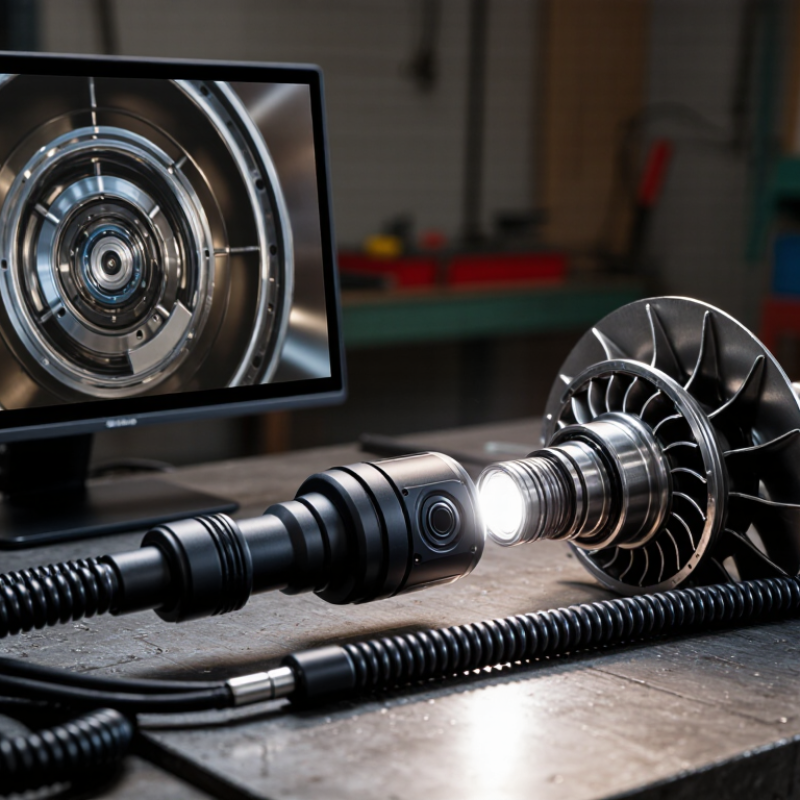
A video endoscope combines a miniature camera, light source, flexible probe, and display. The camera captures images inside narrow, dark spaces. The light must be bright but controlled, because glare can hide cracks or corrosion. In practical inspections, adjustable illumination is often more useful than maximum brightness.

Shaft diameter affects where the instrument can enter. Common sizes range from 3.9 to 8.5 mm. A 3.9 mm shaft reaches smaller passages, but its probe may feel less rigid. An 8.5 mm shaft can provide stronger handling and larger image components, yet it needs more access space. Probe length, bending angle, tip articulation, and camera resolution also deserve careful checks. A clear image is not enough.

When comparing manufacturers, request inspection samples, calibration records, ingress protection details, and repair procedures. Ask how the camera performs on reflective metal, wet surfaces, and low-light areas. Reliable suppliers should explain image quality honestly, including its limits. Test the controls with gloves if the device will be used in maintenance work. Small details matter.

Do not choose by diameter alone. A smaller probe can still fail when its cable bends too easily. I have found that promised specifications sometimes look better than real handling. Independent testing, operator training, and available replacement parts can reveal that gap. The best choice matches the passage, lighting conditions, inspection frequency, and technician’s experience.

How Video Endoscopes Form Images: 720p/1080p Resolution and LED Illumination

A video endoscope forms images through a miniature lens, sensor, processor, and display. A 720p image contains about 921,600 pixels, while 1080p contains about 2.07 million. That difference matters when inspecting fine cracks, weld edges, or narrow cavities. However, resolution alone can mislead. Lens quality, sensor size, image compression, and the working distance often decide whether details remain visible. A manufacturer should provide measured image samples, not only a resolution label. The EMVA 1288 standard offers useful methods for comparing noise, sensitivity, and dynamic range.

LED illumination affects image clarity just as strongly. Poor lighting creates bright centers, dark corners, and false surface colors. Good systems control light distribution near the distal tip. They should also manage heat during extended inspections. The U.S. Department of Energy’s 2022 SSL R&D Plan reported laboratory white LED efficacy above 200 lumens per watt, but complete optical systems usually achieve less. That gap deserves attention. Ask manufacturers for illuminance data at the working distance, color-rendering values, and uniformity test conditions. In field use, I have found that a slightly softer, even light can reveal scratches better than a brighter beam. It is not always intuitive. A 1080p camera with weak illumination may show less useful detail than a well-lit 720p system. Save uncompressed samples when possible, because aggressive video compression can erase tiny defects.

Key Inspection Specifications: 360° Articulation, IP67 Protection, and Reach

What Is a Video Endoscope and How to Choose Manufacturers?

A video endoscope is a flexible inspection tool with a camera, light, and display. It reaches inside engines, pipes, turbines, and narrow mechanical cavities without major disassembly. In practical inspections, 360° articulation matters greatly. It lets operators steer the probe around bends and view hidden surfaces. Smooth control is more valuable than impressive specifications alone. Poor articulation can leave blind spots.

IP67 protection indicates resistance to dust and temporary water immersion under defined test conditions. However, users should confirm the actual test standard and certificate. A rugged housing helps in workshops, but it does not remove the need for careful cleaning and storage. Reach also requires close attention. A longer probe may access deeper areas, yet it can feel harder to control. The best length depends on the inspection path, not the catalogue headline.

Tips: Ask manufacturers for articulation tests, insertion-tube materials, minimum bend radius, and image samples. Check whether the stated reach includes the camera tip. Request calibration records and repair procedures. Test the device on a similar component before purchasing. I have found that simple controls often outperform complex menus during urgent inspections. Still, no specification solves every problem. Operator training remains easy to underestimate. Reliable manufacturers explain limitations clearly and provide practical technical support.

Key Video Endoscope Inspection Specifications

When comparing industrial video endoscopes, evaluate articulation, ingress protection, and insertion reach together. The chart presents representative procurement benchmarks: full 360° articulation, IP67-level protection, and a 3 m insertion reach.

How to Compare Manufacturers: ISO 9001, Probe Diameter, Warranty, and Service

A video endoscope is a flexible inspection tool with a camera, light, and display. It helps technicians examine pipes, engines, welds, and narrow cavities without major disassembly. In practical inspection work, image quality alone rarely determines success. Probe diameter matters most. A smaller probe can enter tighter spaces, while a larger probe may provide stronger lighting and clearer images.

When comparing manufacturers, examine ISO 9001 certification and its current scope. This standard suggests controlled production and documented quality processes. Still, a certificate does not guarantee excellent field performance. Ask for inspection records, calibration procedures, and sample images from difficult environments. Request clear details about sensor resolution, articulation range, and probe durability.

Warranty terms deserve close attention. Read the exclusions. A useful warranty should state coverage length, repair responsibilities, shipping arrangements, and expected turnaround time. Service quality matters after purchase. Ask whether trained technicians handle repairs and whether replacement probes are available. In real work, waiting several weeks can interrupt an inspection schedule. Some manufacturers respond quickly before payment, then become difficult to reach later. That gap matters.

My comparison checklist is imperfect, because access conditions change from site to site. I would test the device with a representative probe before ordering. Check image stability, control smoothness, and lighting around sharp bends. If the image fails in a dark cavity, technical specifications will not solve the problem. A lower price can mislead.

Application Fit and Compliance: IEC 60529 Ratings and ISO 17637 Visual Testing

A video endoscope is useful only when its protection level matches the inspection environment.

In a wet tank, dusty duct, or narrow weld joint, small design choices affect evidence quality. IEC 60529 defines IP ratings for protection against solids and water ingress. It does not automatically certify image accuracy, temperature resistance, or chemical compatibility. Ask manufacturers for test reports, conditions, and the exact enclosure configuration.

IP67 alone is not enough.

A connector, probe joint, or repaired seal may change the result.

ISO 17637 brings the discussion closer to weld inspection. It addresses visual testing of fusion-welded joints, including preparation, lighting, access, viewing distance, and recording. A suitable videoscope should deliver stable illumination, focused images, and controlled articulation around the weld profile.

Its display should preserve indications rather than hide them with aggressive sharpening. Check whether the system supports photographs, video, scale references, and traceable file names. These details matter during review.

When comparing manufacturers, describe the real task before requesting a quotation. State the bore diameter, probe length, bend radius, surface condition, moisture exposure, and inspection temperature.

Request demonstrations using similar weld geometry. Ask how operators are trained and how calibration is verified. Experience helps here, but it can create blind spots.

We once treated a bright image as a better image; it washed out a shallow indication. A repeatable procedure is safer than confidence alone. Choose a supplier that documents limits clearly and admits where the instrument needs support from other methods.

FAQS

What is a video endoscope used for?

It uses a small camera, light, flexible probe, and display. Technicians inspect narrow, dark spaces without major disassembly. It can reveal cracks, corrosion, scratches, weld edges, and surface damage.

How does shaft diameter affect inspection work?

Shafts commonly measure 3.9 to 8.5 millimeters. A 3.9 mm shaft enters tighter passages. An 8.5 mm shaft usually feels more rigid but needs more access space. Smaller is not always better.

What should I check besides shaft diameter?

Check probe length, bending angle, tip movement, cable stiffness, camera resolution, and working distance. A thin cable may bend too easily. That can make positioning frustrating.

Is 1080p always better than 720p?

Not always. A 1080p image contains more pixels, which can help show fine cracks. However, lens quality, sensor performance, lighting, compression, and distance also matter. A well-lit 720p image may reveal more useful detail.

Why is adjustable LED lighting important?

Excessive brightness can create glare on reflective metal. Weak lighting can hide defects in dark corners. Even illumination often works better than a very bright central beam. Softer light can reveal scratches.

What image samples should a supplier provide?

Request real samples from reflective metal, wet surfaces, low-light cavities, and narrow passages. Ask for uncompressed files when possible. Compression may erase tiny defects. Resolution labels alone prove little.

Which manufacturer details deserve careful review?

Request calibration records, ingress protection information, repair procedures, replacement-part availability, and measured lighting data. Ask about color rendering and light uniformity. Test the controls while wearing gloves.

How can I compare two inspection systems fairly?

Use the same target, distance, lighting level, and recording format. Compare fine cracks, corrosion edges, and dark corners. Independent testing helps expose optimistic specifications. My first choice might still be wrong.

Conclusion

A video endoscope is a compact inspection instrument that combines a camera, LED light source, flexible probe, and a shaft typically measuring 3.9–8.5 mm in diameter. It captures images inside narrow or hard-to-reach areas, with common systems offering 720p or 1080p resolution for clear visual assessment. Important performance specifications include 360° articulation, sufficient probe reach, durable construction, and IP67 protection against dust and temporary water exposure.

When comparing video endoscope manufacturers, buyers should evaluate ISO 9001 quality management, probe diameter options, image performance, articulation control, warranty coverage, and technical service. The selected system should match the inspection environment and applicable requirements, including IEC 60529 protection ratings and ISO 17637 guidance for visual testing. A careful comparison of inspection goals, compliance needs, operating conditions, and long-term support can help users choose a reliable and efficient solution.

Charlotte

Charlotte

Charlotte is a seasoned marketing professional with a deep understanding of the company's portfolio and a passion for elevating its presence in the market. With a keen eye for detail and a commitment to excellence, she ensures that our professional blog is regularly updated with insightful articles......